UV Epoxy is revolutionizing the way electronics are assembled, offering fast, reliable, and precise bonding for a wide range of applications. For electronics manufacturers, engineers, and R&D teams, understanding how UV-curable adhesives work and why they are becoming industry standards is essential. This guide will walk you through the fundamentals, key benefits, practical use cases, and tips for success with UV Epoxy in electronics manufacturing.
What Is UV Epoxy?
UV Epoxy is a type of adhesive that cures, or hardens, when exposed to ultraviolet (UV) light. Unlike traditional two-part epoxies that require mixing and long curing times, UV-curable adhesives offer rapid processing and reliable bonding. This technology is widely used in electronics manufacturing for bonding, sealing, coating, and encapsulation tasks.
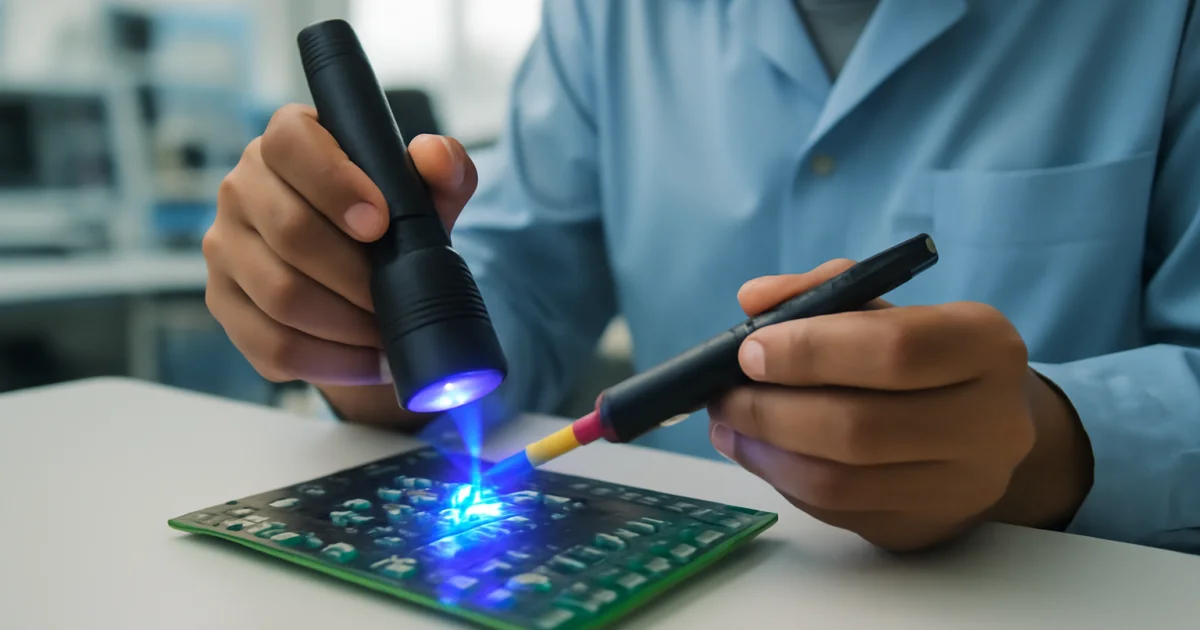
These adhesives are typically one-component, meaning they are ready to use straight from the container. Curing begins when the adhesive is exposed to UV light, causing the molecules to cross-link and form a strong, durable bond within seconds to minutes. This process is ideal for high-throughput production environments where speed and precision are vital.
Furthermore, UV Epoxy systems are engineered for versatility, making them suitable for a range of electronic components and assemblies. Manufacturers can choose from a variety of formulations designed to meet specific performance requirements—such as thermal conductivity, electrical insulation, optical clarity, or chemical resistance—enabling precise customization for each application.
How Does UV Epoxy Work?
The curing process of UV Epoxy is based on photoinitiators in the adhesive formula. When exposed to UV light, these photoinitiators create chemical reactions that quickly transform the liquid adhesive into a solid. The result is a strong, thermoset polymer that adheres well to a variety of substrates such as glass, plastics, metals, and electronic components.
Key advantages of this curing mechanism include:
- Speed: Cure times can be as short as a few seconds, enabling rapid assembly and throughput.
- Control: Curing only occurs where and when you apply UV light, offering precision for small or complex assemblies.
- Reduced Waste: No mixing means less material wasted and fewer handling errors.
UV Epoxy is compatible with automated dispensing systems and robotic assembly lines, further streamlining the process and reducing the risk of human error. It is also possible to integrate UV curing stations directly into manufacturing lines, allowing for in-line quality checks and immediate downstream processing. This integration is a key factor in the ongoing trend toward smart manufacturing and Industry 4.0 initiatives.
Main Benefits of this solution in Electronics Manufacturing
Electronics manufacturers are turning to the service for several compelling reasons. Here are the main benefits:
- Fast Processing: Accelerates production lines, reduces bottlenecks, and increases output.
- High Bond Strength: Offers durable adhesion suitable for demanding environments.
- Precision Application: Perfect for microelectronics, where fine features and small bond lines are essential.
- Versatility: Bonds a wide range of substrates, including glass, ceramics, metals, and plastics.
- Improved Quality Control: Immediate cure allows for in-line quality checks and reduced rework.
- Cleaner Process: No mixing or measuring required, minimizing operator error and contamination risks.
For applications requiring environmental protection, UV-curable adhesives can also be formulated as electronics coatings to protect sensitive components from moisture, dust, and chemicals.
Another critical advantage is the ability to minimize thermal stress on components. Since this option cures at room temperature, delicate devices and assemblies are not exposed to the heat required by some traditional adhesives. This is particularly important when working with temperature-sensitive microchips, optical sensors, and displays.
Key Applications of the approach in Electronics
this guide is used throughout the electronics industry for applications such as:
- PCB Assembly: Bonding components, fixtures, and wire tacking.
- Optoelectronics: Securing lenses, optical fibers, and LED components.
- Encapsulation & Potting: Protecting microchips and sensors from environmental exposure.
- Electronic Coatings: Providing insulation and protection for PCBs and assemblies.
- Connector Sealing: Preventing ingress of moisture and dust in connectors and housings.
- Display Assembly: Bonding touch panels and glass covers in consumer electronics.
These applications benefit from the fast cure, strong bond, and process control that UV-curable adhesives deliver.
Additional scenarios include sensor integration—for example, in automotive or industrial IoT devices—where this solution ensures robust attachment and long-term reliability, even in harsh environments. Medical device manufacturers also use UV-curable adhesives for assembling diagnostic equipment, where both biocompatibility and fast processing are required. In wearables, flexible electronics, and next-generation displays, the ability to form precise, invisible bonds without adding bulk is a major advantage.
the service vs. Two-Part Epoxy: Cost of Ownership Comparison
Manufacturers often compare UV-curable adhesives with traditional two-part epoxies. While two-part epoxies have their place in industrial bonding, this option offers several cost advantages, especially in high-volume electronics assembly like smartphones:
- Labor Savings: the approach eliminates the need for precise mixing and long pot lives, reducing labor costs and training requirements.
- Faster Cycle Times: Immediate curing speeds up production, enabling more units per hour.
- Reduced Rework and Scrap: On-demand curing means errors can be caught early, minimizing expensive rework and material waste.
- Lower Energy Use: UV curing often requires less energy than heat-curing ovens used for two-part epoxies.
- Process Flexibility: UV adhesives allow for automated dispensing and integration with in-line inspection systems.
Although UV-curable adhesives may have a higher unit price, the total cost of ownership is often lower due to higher yields, lower labor, and reduced downtime. For smartphone assembly and similar high-volume tasks, these benefits can be significant.
Consider a scenario where a smartphone assembly plant switches from two-part epoxy to this guide for display bonding. The plant can reduce assembly time per device by several minutes, eliminate the risk of mixing errors, and improve yield through immediate inspection. Over thousands of devices per day, these incremental improvements add up to substantial cost savings and higher product quality.
Additionally, as electronics manufacturers continue to automate and scale production, the compatibility of this solution with robotics and vision systems further enhances its economic value. Automated lines can be designed with real-time process monitoring, reducing the risk of batch failures and improving traceability across operations.
Types of the service and UV-Curable Adhesives
There are several types of this option and related UV-curable adhesives, each designed for specific electronic applications:
- Epoxy Resins: High bond strength, good chemical resistance, and electrical insulation properties. Ideal for structural bonding and potting.
- UV Acrylics: Fastest cure times and flexible bonding. Common for bonding plastics and glass in displays.
- Hybrid UV Adhesives: Combine UV curing with moisture or heat curing, ensuring full cure in shadowed or opaque areas.
- UV-Curable Coatings: Used as protective layers on PCBs and components.
Selecting the right adhesive depends on substrate materials, mechanical requirements, and exposure conditions.
For example, hybrid UV adhesives are ideal for complex assemblies where some areas are not accessible to direct UV light. In high-reliability applications such as aerospace or medical electronics, specialized formulations that meet stringent performance standards are available. Manufacturers can also choose the approach with tailored viscosity, thixotropy, or optical properties, depending on the requirements of their assembly process.
Another consideration is the choice of photoinitiator and UV wavelength. Certain formulations are optimized for specific lamp types (e.g., LED, mercury vapor), which affects cure speed, depth, and efficiency. Consulting with adhesive experts ensures the best match between adhesive and curing equipment.
Best Practices for Using this guide in Electronics Assembly
To maximize the performance of this solution in electronics manufacturing, follow these best practices:
- Surface Preparation: Clean and dry surfaces for optimal adhesion. Use electronic cleaning solutions if needed.
- Dispensing Accuracy: Use suitable dispensing equipment to deliver precise volumes, especially for microelectronic assemblies.
- Proper UV Exposure: Ensure uniform and adequate UV light intensity for full cure. Consider shadowed areas and use hybrid adhesives if necessary.
- Process Validation: Test bond strength and cure depth to ensure consistent quality.
- Safety Measures: Shield operators from direct UV light and use appropriate personal protective equipment.
Working with technical experts and application laboratories can help optimize adhesive selection and process parameters for your specific requirements.
A practical workflow for electronics manufacturers might look like this:
- Thoroughly clean all bonding surfaces to remove dust, oils, and contaminants.
- Apply the service using an automated dispenser or precision syringe for consistent results.
- Position components in a fixture or jig to maintain alignment during curing.
- Expose the assembly to calibrated UV light, verifying that lamp intensity and exposure time match the adhesive’s specifications.
- Perform immediate quality checks—such as bond line inspection or pull testing—before releasing the assembly to the next production stage.
For new product introduction (NPI) or process changes, conduct pilot runs and document curing profiles, environmental conditions, and inspection criteria. This data-driven approach streamlines troubleshooting and supports continuous improvement efforts.
Common Challenges and How to Overcome Them
While this option offers significant advantages, manufacturers may face some challenges:
- Shadowed Areas: UV light cannot reach all surfaces in complex assemblies. Solution: Use dual-cure adhesives that combine UV and secondary curing mechanisms.
- Substrate Compatibility: Some plastics or coated surfaces may block UV light or inhibit adhesion. Solution: Pre-treat surfaces with plasma or select formulations designed for difficult substrates.
- Equipment Calibration: Inconsistent curing can result from improper lamp maintenance or incorrect exposure times. Solution: Regularly calibrate and maintain UV curing equipment.
- Operator Safety: UV light can be hazardous. Solution: Use shielding, interlocks, and train staff on proper safety protocols.
Collaborating with a knowledgeable adhesive supplier helps address these challenges and ensures a reliable process.
In addition to these, manufacturers may encounter challenges with shelf life management and storage requirements, as some UV-curable adhesives are sensitive to ambient light and temperature. Implementing controlled storage, using light-blocking containers, and establishing clear inventory rotation policies help maintain adhesive quality and performance consistency.
Common mistakes to avoid include under-curing (due to insufficient exposure time or lamp degradation), over-application (which can cause overflow or shadowing), and poor documentation of curing parameters. Setting up regular training and standard operating procedures (SOPs) for all staff involved in adhesive application and curing is highly recommended.
How to Select the Right the approach for Your Application
Choosing the right UV-curable adhesive involves several key considerations:
- Application Requirements: Define bond strength, flexibility, chemical resistance, and electrical properties needed.
- Substrate Materials: Specify all materials involved in the assembly.
- Production Environment: Evaluate curing equipment, throughput demands, and any automated processes.
- Compliance and Certifications: Ensure the adhesive meets relevant industry standards (e.g., RoHS, ISO, REACH, medical or aerospace requirements).
- Technical Support: Partner with suppliers who offer testing, process validation, and on-site support.
Pacific Adhesive Systems provides technical guidance and customized solutions to help electronics manufacturers select and implement the best UV-curable adhesives for their unique production needs.
Before finalizing an adhesive, request samples and perform in-house trials under real production conditions. Assess factors such as open time, cure speed, bond line thickness, and compatibility with your current equipment. Review safety data sheets (SDS) and technical data sheets (TDS) to ensure the product aligns with your quality management system and regulatory requirements.
Checklist for selecting this guide:
- Confirm the adhesive meets required mechanical, electrical, and chemical specifications.
- Validate performance on representative substrates and components.
- Ensure compatibility with dispensing and curing equipment.
- Verify certifications for your industry (medical, aerospace, automotive, etc.).
- Establish a partnership with suppliers for ongoing technical support and process optimization.
By following a structured selection process and leveraging expert advice, manufacturers can confidently integrate this solution into their electronics assembly lines and achieve superior, repeatable results.
Conclusion
the service and other UV-curable adhesives have become essential tools for modern electronics manufacturing. Their fast cure times, process control, and versatility make them ideal for high-volume, high-precision applications. By understanding the basics and following best practices, manufacturers can achieve superior bonding results, reduced costs, and increased productivity. For tailored advice and the latest adhesive technologies, working with experienced partners like Pacific Adhesive Systems ensures ongoing success in your electronics assembly projects.
Frequently Asked Questions
What is the main difference between UV Epoxy and traditional two-part epoxy adhesives?
The primary difference is the curing mechanism. UV Epoxy cures when exposed to UV light, offering rapid processing and immediate bond strength, while traditional two-part epoxies require mixing and can take hours to fully cure. UV Epoxy is ideal for applications needing speed and precision, such as electronics assembly.
How does UV Epoxy reduce production costs in electronics manufacturing?
UV Epoxy reduces production costs by eliminating mixing steps, minimizing labor, speeding up assembly with fast cure times, reducing rework and scrap, and enabling automated, in-line quality control. The overall cost of ownership is often lower compared to traditional adhesives, especially in high-volume production environments such as smartphone assembly.
Can UV Epoxy be used for coating and protecting electronic components?
Yes, UV Epoxy and other UV-curable adhesives can be formulated as electronic coatings to provide insulation and environmental protection for sensitive components. These coatings cure quickly and offer resistance to moisture, dust, and chemicals.
What are the limitations of UV Epoxy in electronics applications?
Limitations include difficulty curing in shadowed or opaque areas where UV light cannot reach, and potential incompatibility with certain substrate materials that absorb or reflect UV light. Solutions include using dual-cure adhesives or pre-treating substrates to improve adhesion and cure reliability.
How do I choose the right UV Epoxy for my electronics project?
To select the right UV Epoxy, consider your application’s bond strength, flexibility, chemical and electrical requirements, substrate materials, production setup, and any compliance needs. Consulting with adhesive experts or suppliers can help identify the most suitable product and ensure optimal results.
Ready to Transform Your Electronics Assembly with UV Epoxy?
Partner with Pacific Adhesive Systems for expert advice, advanced UV-curable adhesives, dispensing solutions, and technical support tailored to your electronics manufacturing needs. Discover how our one-stop approach, application labs, and ISO 9001:2015 quality help you achieve reliable, high-performance bonding from design to mass production.